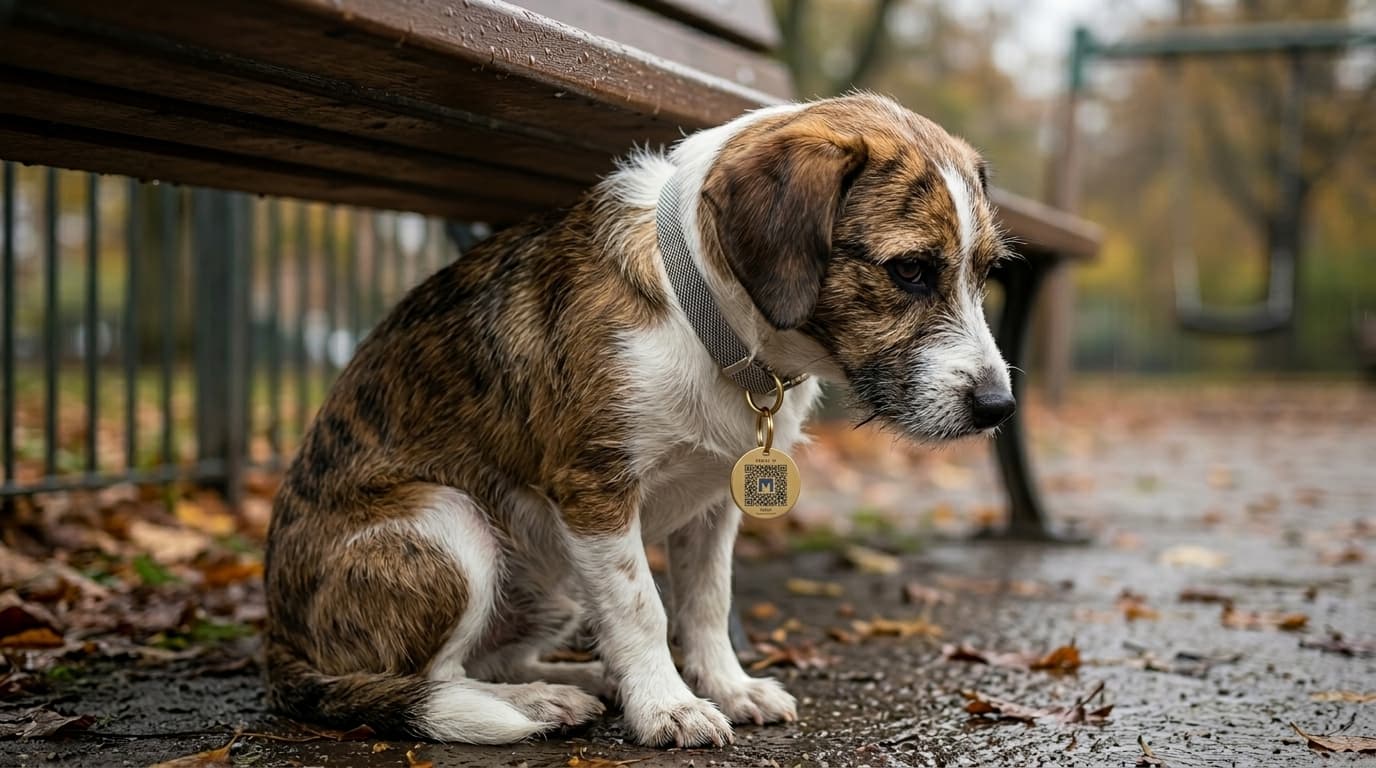
Your dog has a microchip. Vaccinated, registered, licensed. But one day they escape from the garden, get separated from you in the mountains, or a delivery person opens the door and lets them out. A neighbour finds them, a family out for a walk, someone who sees them alone on the road.
And in that moment, the chip arrives too late.
How the chip works and where it falls short
The microchip is a glass cylinder the size of a grain of rice, implanted under the skin of the neck, with a unique 15-digit code. Reading it requires a radiofrequency reader — the device used by vets and some shelters. Once read, the code is checked in the corresponding regional database (AIAC in Catalonia, others depending on the region) and the owner's details are returned.
The system is mandatory and it works, but it has three constraints:
- Whoever finds the dog has to take them somewhere with a reader.
- It has to be opening hours.
- The owner's details in the database need to be up to date.
If your dog goes missing on a Saturday night in a rural area, or someone without a car finds them, the chip doesn't solve anything until Monday.
What MEKET does and what it does NOT do
MEKET doesn't replace the chip. The chip officially identifies the animal and is mandatory by law. MEKET is complementary: it puts your contact information on the collar, accessible instantly to anyone with a phone.
Whoever finds the dog scans the QR. They see the animal's name, your phone, instructions you've left ("warn before moving if anxious"), medical information if you've added it, and the reference vet's details.
No app to download. No need to go to a clinic. No need to wait until Monday.
What you decide is visible
You choose field by field which information is public. You can show:
- The dog's name and the owner's contact.
- Microchip and reference vet.
- Vaccinations — especially rabies, vital if they've bitten someone.
- Allergies or medication.
- European pet passport if you travel with them.
Your home address shouldn't be in the QR — whoever finds the dog doesn't need to know where you live, just how to reach you.
What situations it works best for
- Escape from the garden or the walk. The neighbour who finds them calls you in 30 seconds.
- Hunting, hiking, road trips. If they get separated from you far from home, where no one knows them, the chip takes time; the QR doesn't.
- Adopted dogs with a complicated history. Lets you add specific instructions for whoever finds them.
- Run over by a car. Whoever finds them can call you while you're on your way. And they can give the vet allergies and medication instantly, without waiting for you to arrive in a panic to remember them.
How to set it up
The pet profile is part of the paid plans: MEKET+ includes your profile plus one pet, and MEKET Family covers your whole family under one account — adults, minors, pets and objects. Set it up once, manage everything from the same place.
Generate your dog's QR, print it, put it on a metal tag on the collar or as a sticker on the carrier. The chip stays where it is. The QR goes on top.
The two systems work together — one identifies officially, the other alerts fast.
What you do NOT need to do
- You don't have to replace the chip. The chip stays where it is.
- You don't have to download an app, or have a Google or Apple account to use the QR.
- You don't have to change the collar — it's enough to stick the tag or label on the one you already have.
See the plans and protect my dog →
A single account covers your entire family. You'll have the QRs printed and hanging from the collar this same afternoon.